AS you hike up the berg or wind your way up Table Mountain this holiday, it is easy to look around and think, “This is wild, untouched nature.” But often, it is not.
Behind the views we love, many of South Africa’s mountain slopes are quietly being taken over by invasive trees and shrubs like pines, wattles and gums.
They look green and “foresty”, but they are anything but harmless.
According to Husqvarna South Africa’s Marketing Manager, Timothy Isabirye, invasive trees compete with indigenous plants, disrupt ecosystems and reduce vital resources like water.
And in our mountain catchments, that has massive consequences for people and nature.
Isabirye goes on to share three more ways invasive plants harm our mountains and why clearing them, safely and correctly, matters:
- They strip away biodiversity: South Africa is one of the most biodiverse places on earth, yet invasive species remain one of the biggest threats to that richness.
In mountain ecosystems like the Drakensberg and the Cape, dense stands of invasive trees shade out fynbos, grasslands and proteas, outcompete slow-growing indigenous plants, and reduce essential habitat for the insects, birds and small mammals that depend on them. The result is a quieter, poorer landscape. You might still see green slopes from a distance, but up close, there are fewer species, less variety and less resilience.
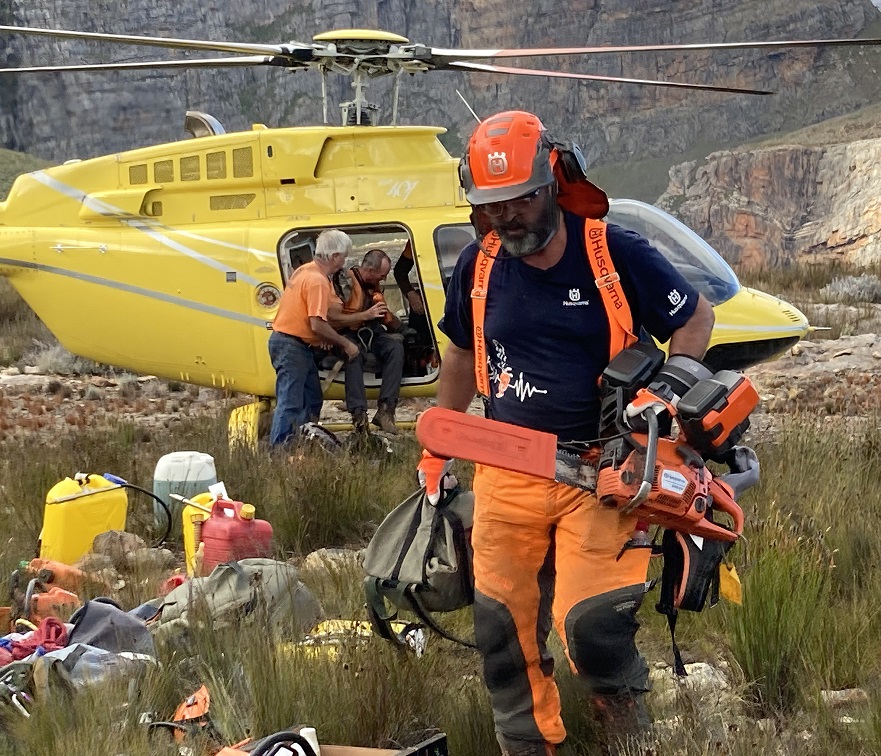
2. They steal our water: In an already water-stressed country, this is the big one! Deep-rooted invasives like pines and gums are very thirsty, and studies show they can reduce river flows by six to seven per cent. That equates to billions of litres lost every single year. Mountain catchments are South Africa’s “water factories”, yet invasives intercept rainfall, draw more water from the ground than indigenous plants, and reduce the flow into dams, rivers and wetlands downstream. This is why national programmes are essential and why Husqvarna is a massive supporter of people and organisations, like Helihack, who are committed to removing invasive plants.

3. They turn mountains into tinderboxes: Fire is a natural part of our ecosystems, especially fynbos. But there’s a very big difference between a healthy ecological burn and a runaway inferno. Invasive trees disrupt natural fire cycles by creating heavy fuel loads, carrying flames into the canopy, and driving fire intensity far beyond what indigenous plants can tolerate. In fact, studies in fynbos catchments show that dense alien stands increase fire severity and worsen soil and hydrological impacts after burns. In simple terms, invasives can turn a manageable mountain fire into a dangerous blaze that threatens lives, damages soil, accelerates erosion and flooding, and sets back indigenous vegetation for decades.
So, this December, as you spend time in nature, remember that those beautiful, clear streams and wide-open views rely on the passionate volunteers and rangers behind the scenes. Organisations like Helihack commit their lives to clearing invasives so that our ecosystems can keep functioning, and they need more companies, like Husqvarna, supporting them.
“If we want healthy rivers, safe communities and thriving wildlife, we must take invasive plants seriously. Clearing them is one of the most powerful ways to protect the places that restore us,” Isabirye concludes.
For more information or to view Husqvarna’s range of products, visit www.husqvarna.co.za