SOUTH AFRICA’s pork market has undergone a dramatic reversal in recent months, with fears of shortages giving way to a significant oversupply that is driving wholesale prices sharply lower and bringing relief to consumers.
According to Eskort CEO Arnold Prinsloo, wholesale pork prices have fallen from around R40/kg to approximately R30/kg, after earlier outbreaks of African Swine Fever (ASF) and Foot-and-Mouth Disease (FMD) temporarily disrupted supply and triggered precautionary imports.
Earlier this year, concerns that disease outbreaks would significantly reduce local supply prompted processors to secure imported pork to avoid potential shortages. With imported meat taking between eight and ten weeks to arrive, those shipments entered the market just as local farms emerged from mandatory disease control restrictions and resumed normal operations.
“Instead of the shortages many anticipated, the market has swung in the opposite direction,” says Prinsloo. “Imports arrived at the same time as local supply recovered, creating a significant surplus of pork.”
Under South Africa’s animal health regulations, farms affected by FMD are placed under restrictions for a minimum of 42 days after no new symptoms are detected. While these measures are essential for disease control, they also create a backlog of market-ready animals that enter the market once restrictions are lifted.
Combined with softer consumer demand following earlier price increases, the result has been a substantial oversupply of pork, placing downward pressure on prices. Prinsloo expects the market to stabilise closer to its historical average of around R32/kg as supply and demand gradually rebalance.
The lower wholesale prices are already filtering through to retailers, with Eskort products dropping significantly including pork chops being reduced from R120/kg to approximately R80/kg, boerewors from around R120/kg to approximately R100/kg and three packs of bacon that previously retailed at around R130 now selling for approximately R100.
“The current market conditions are good news for consumers,” says Prinsloo. “We have ample supply, lower prices and, importantly, no food safety risk to consumers.”
Prinsloo says the recent outbreaks also reinforce the importance of continued investment in biosecurity, veterinary services and disease surveillance to protect South Africa’s livestock industry and maintain long-term food security.
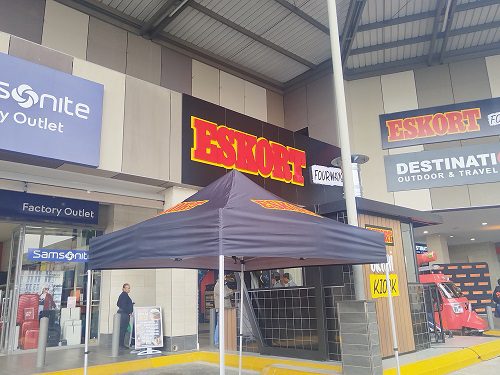
Image SLM (The newly opened Eskort branch at Fourways, Jozi.)