By Andile Mathobela
OPINION: There comes a point where someone has to say what many journalists, content creators and media practitioners whisper in WhatsApp groups but are too afraid to say publicly.
This is that moment.
Recently, I attended the Sidestep x Blxckie Listening Session at Clearwater Mall after being invited to cover the event for my new YouTube platform, AndileUnfiltered.
The platform exists to showcase the side of the entertainment industry the public rarely gets to see, behind-the-scenes access, authentic conversations and the people who make the culture move.
I’ve spent over 16 years covering South Africa’s entertainment industry. I’ve interviewed everyone from emerging artists to international stars. I’ve watched careers rise, fall and rise again. One thing that has never changed is this:
Some artists still don’t respect the media.
And that has to change.
This Isn’t About One Interview
People think this conversation is about one interview with Blxckie.
It isn’t.
It’s about an attitude that has become normal in our industry.
I travelled to the event.
I paid for transport.
I paid a videographer.
I’ll pay an editor.
I sacrificed my time.
Like every media practitioner, I invested money before making a single cent from the content.
When it came time to interview the headline artist, the very reason the event existed,I was told by two members of his team that he was tired and done with interviews.
That was it.
No apology.
No alternative.
No solution.
When I asked what I was supposed to do after travelling all the way to the venue specifically to cover him, nobody had an answer.
Instead, I was met with attitude.
Only after the record label intervened was I given one reluctant question.
One question.
At an event designed to promote his music.
Here’s What Bothers Me
Artists often forget something very important:
Media coverage is not guaranteed.
Nobody owes an artist publicity.
Journalists don’t wake up every morning thinking about how to promote musicians for free.
We choose to.
Every interview…
Every article…
Every video…
Every Instagram Reel…
Every TikTok…
…helps build an artist’s brand.
If the media disappeared tomorrow, many artists would suddenly realise just how much free marketing they receive every single day.
Then Came the Instagram Story…
After I published my honest opinion and said that he should do better, Blxckie responded by posting my face on Instagram and claiming that I smelled like a shebeen and implying that I was drunk.
That statement wasn’t just disrespectful.
It was false.
The irony?
The venue itself was serving alcohol.
Yes, I had a beer.
I’m an adult.
Since when does legally drinking a beer at an event disqualify someone from doing their job?
And if that was genuinely his reason…
Why did he refuse interviews with other media houses that also complained to me afterwards?
Were they all drunk too?
Or was this simply an excuse?
Artists Need to Learn One Thing…
Criticism isn’t hate.
Not every opinion that challenges you is an attack.
The biggest artists in the world face criticism every single day.
What separates professionals from amateurs is how they respond.
You can disagree.
You can clarify.
You can even laugh it off.
But publicly mocking journalists who were invited to your event sends the wrong message, not just to the media, but to brands, sponsors and industry partners watching from the sidelines.
Respect Goes Both Ways
The relationship between artists and the media should never be one-sided.
Media practitioners also have responsibilities.
We should be professional.
We should be fair.
We should ask informed questions.
We should avoid sensationalism for clicks.
But artists also have responsibilities.
If you schedule a media day…
Do the media.
If you’re too exhausted…
Tell your team to communicate properly.
If you need to limit interviews…
Set expectations before inviting people.
Don’t invite journalists to travel across Johannesburg, spend their own money and then treat them like an inconvenience.
This Is Bigger Than Blxckie
Today’s conversation is about Blxckie.
Tomorrow it could be another artist.
The issue remains the same.
South Africa’s entertainment industry talks endlessly about “supporting local.”
Support works both ways.
Artists want journalists when they release music.
They want interviews before tours.
They want headlines when they’re nominated.
They want coverage when they sign deals.
They want media when they win awards.
But when the cameras arrive…
Some suddenly become “too tired.”
My Advice to Artists
If you’re serious about building a long-term career:
- Respect people’s time as much as you expect them to respect yours.
- Remember that every interview is an opportunity, not an obligation.
- Learn how to take criticism without making it personal.
- Treat journalists and content creators as partners, not obstacles.
- If you don’t want media at your events, don’t invite them.
The Conversation We Need to Have
This isn’t about cancelling anyone.
It’s about accountability.
The entertainment industry only grows when everyone involved is respected, from artists and managers to photographers, editors, journalists, videographers, stylists and fans.
For over 16 years, I’ve dedicated my career to documenting South African culture because I genuinely love this industry.
I’ll continue to celebrate artists when they deserve praise.
And I’ll continue to call out behaviour that I believe hurts the culture.
That’s not being negative.
That’s doing my job.
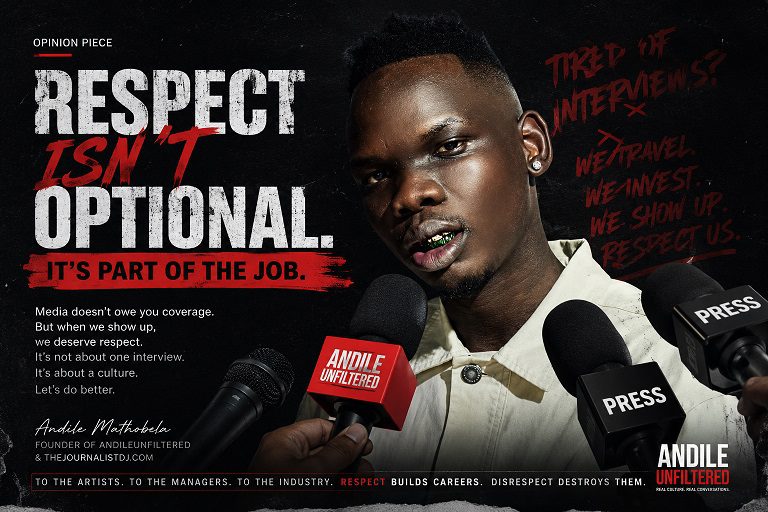
Image supplied Andile Mathobela (Thuggerish behaviour. Blxckie has been slandered for mistreating journos at his listening session.)