ADDRESS: by Narend Singh, deputy minister- Forestry, Fisheries and Environment
It is a privilege to address you at this year’s Best Results and Achievements Gathering Summit. The title itself gives us, at least for today, a welcome departure from the usual government reports and presentations. It allows us to talk about what is working, what has changed lives and what South Africa can genuinely be proud of.
In the spirit of BRAG, I will not dedicate my words to policies, processes or meetings.
Important as they are, they do not, by themselves, determine whether government has fulfilled its obligations. The real test is much simpler: what difference have we made to people’s lives, to our communities and to the environment entrusted to our care?
For me, that question must include what we have done to create opportunities for young South Africans, said the minister during today’s Summit held in Johannesburg.
Environmental protection is essential, but equally important is the creation of an economy in which people can find employment, develop skills, start businesses and build careers. In that respect, the environmental sector has far more to offer than many young people realise.
Therefore, when we BRAG today, we should not merely recite the number of trees planted, tonnes of waste recycled, inspections conducted, students trained or hectares protected.
We should BRAG about what those numbers mean: communities gaining opportunities; young people acquiring skills; small businesses entering the economy; waste pickers joining formal value chains; scientists producing knowledge used beyond our borders; and ecosystems being secured for future generations.
A tree can become food and income. Waste can become a resource and a business. A plantation can become a community asset. Scientific research can create an industry. A protected area can sustain livelihoods. And a species brought back from the brink of extinction, when only 17 animals remained, can become a conservation success recognised across the world.
This is business unusual, and this is why we BRAG today.
Let me start with something familiar to all of us- a tree. In 2020, the Department was tasked with coordinating the planting of at least two million trees per year for five years, prioritising fruit and indigenous trees.
We exceeded that target. On Heritage Day last year, South Africans united to plant more than 1.3 million trees in a single day. Each tree represents more than an environmental statistic: it can improve household food security, green a school, restore an ecosystem, create a small orchard or generate income.
Our next national ambition is to coordinate the planting of one billion trees over five years, including 10 million trees on Heritage Day this year.
Forestry
Our forestry achievements go beyond planting.
Through 36 Community Forestry Agreements, more than 9,200 hectares of plantations are now covered by arrangements that enable communities to participate in managing these assets and benefiting from their value chains.
During 2025/26, 358 beneficiaries in KwaZulu-Natal, the Eastern Cape and Limpopo received training in forestry, harvesting, chainsaw operation, firefighting, planting, pruning, business management and first aid- and the programme achieved a 95.8% completion rate.
That is not only asset transfer; it is the transfer of skills, knowledge and economic opportunity.
Environmental Programmes
The environmental sector creates opportunities at every level- from graduate employment and workplace experience to community work, entrepreneurship and emerging green industries.
Through the Department’s Youth Empowerment and Development Programme, more than 5,000 environmental graduates have already gained placements, mainly in municipalities and partner organisations. Young people have been able to apply their university knowledge in practice, while municipalities have gained environmental-management skills that are often scarce at local level.
The scale of opportunity is equally important.
In the first quarter of the 2026/27 financial year, our Expanded Public Works Programme portfolio generated 24,548 work opportunities. Young people accounted for 81% of those opportunities and women for 72%.
Through the Department’s local-government support model, 22,703 work opportunities were created in practical initiatives including cleaner coastlines, improved waste management, veldfire suppression, wetland rehabilitation and the clearing of invasive plants.
These are opportunities to earn an income while restoring the environment and strengthening communities.
Chemicals and Waste Management
Our circular-economy programmes show how waste can become both a resource and a livelihood.
The Extended Producer Responsibility system has already diverted and recycled nearly 68,000 tonnes of electronic waste from landfills. Through the national E-waste Imbizo programme, communities helped us collect approximately 150 tonnes more, while waste pickers and small businesses were incorporated into the value chain.
The Recycling Enterprise Support Programme has helped create and sustain more than 1,000 jobs, while supported enterprises achieved environmental savings of more than 3.4 million tonnes of carbon dioxide equivalent. That is measurable environmental protection and measurable economic participation.
Climate Innovation
We are also helping South African innovators turn climate challenges into practical businesses.
Through our partnership with P4G, start-ups are developing solar-powered electric-vehicle charging, e-bikes for last-mile delivery and solar-powered refrigeration for cold chains.
Ikhala Impact is using forest biomass to produce biochar, together with digital technologies that measure and report climate benefits. These are not abstract ideas for a distant future; they are South African technologies, enterprises and jobs being built now.
Oceans and Coast
South Africa has more than 3,000 kilometres of coastline and access to the Atlantic, Indian and Southern Oceans.
Through our Oceans-to-Land Programme, more than 1,000 beneficiaries participated in ocean-economy activities during 2025/26, focusing on skills development, capacity building, advocacy and youth empowerment.
Our aquaculture partnerships are advancing Integrated Multi-Trophic Aquaculture and indigenous sea urchin aquaculture, while the Gariep Aquaculture Technology and Demonstration Centre connects universities, TVET colleges, industry and emerging farmers with technology, skills and practical experience.
South African ocean innovation is also being used beyond our borders.
The National Oceans and Coastal Information Management System, developed with the CSIR, SAEON and the South African Weather Service, combines science, technology, data and intelligence to support safer and healthier oceans and help authorities respond to environmental and security threats.
Solutions developed through this system have been implemented in eight countries in Southern and Eastern Africa and the Western Indian Ocean region.
South Africa is not merely consuming environmental knowledge; we are producing systems that other countries use.
South Africa is also the only African country with an Antarctic programme.
Our research vessel, the SA Agulhas II, supports science in Antarctica and around our remote islands. During the recent WHIRLS research voyage, 37 postgraduate students and interns received practical training, while 11 postgraduate students were selected for the WHIRLSchool programme.
We are placing young people where the science happens and giving them experience that can open doors to future careers.
Workplace Learning
The Department has invested more than R75 million in workplace learning for students from universities, universities of technology and TVET colleges who require practical experience to complete their qualifications.
Since 2019, more than 1,200 students have been supported to graduate. That investment is important to every student in this room because the green economy needs more than scientists and engineers.
It also needs lawyers, economists, researchers, communicators, policy specialists, educators, data analysts and community leaders.
SANParks
Through South African National Parks, 3 095 full-time equivalent work opportunities were created, approximately 63% of which benefited young people, while 78 biodiversity enterprises were supported.
SANParks is demonstrating that conservation can create opportunities in tourism, hospitality, environmental services, enterprise development and the sustainable use of natural resources, particularly in communities surrounding protected areas.
Through its partnership with Sanlam, the SANParks–Sanlam Fund had, by June 2026, funded 242 applications and disbursed R51.76 million.
That support sustained 519 jobs, while youth-owned businesses accounted for 39% of funded MSMEs. This is the kind of partnership we must replicate: government and business creating practical pathways for young entrepreneurs to enter markets and grow.
SANBI
Our science institutions are also opening doors.
The South African National Biodiversity Institute’s Groen Sebenza Graduate Development Programme recruited more than 1 250 young graduates through partnerships with over 70 government and non-governmental organisations.
Participants received mentorship, practical experience and workplace training, and by 2026, 600 had secured full-time employment.
SANBI’s National Biodiversity Assessment, completed in 2025, brought together more than 110 institutions and 490 experts. That science is being translated into action through projects such as Ecosystem-based Disaster Risk Reduction, which aims to reach 366 000 direct beneficiaries and five million indirect beneficiaries across four district municipalities.
SANBI is also providing technical and scientific support to nine Southern African Development Community member states. This is South African science creating jobs, strengthening communities and serving our region.
Biodiversity Economy
There is a much bigger economic story behind our biodiversity work.
South Africa’s biodiversity sector already supports more than 418,000 jobs, many of them in rural areas, across ecotourism, game meat, hunting, biodiversity protection, professional services, fishing and ecological restoration. Participation in the wildlife economy has also been broadened through the donation of more than 7,000 wild animals to previously disadvantaged individuals and community beneficiaries, while more than 2,000 people and emerging enterprises have participated in accredited training and capacity building.
We are now building on that foundation. The Biodiversity Megahub Initiative has been approved as a catalytic intervention and is projected to create 130,000 new jobs.
The National Game Meat Strategy is projected to support 2,400 MSMEs and generate more than R3.1 billion in economic value each year. These are not small ambitions: they show how conservation, sustainable use and enterprise development can bring investment and opportunity into communities where jobs are needed most.
Compliance and Enforcement
Protecting opportunity also means protecting the natural assets on which it depends.
During 2025/26, the Department conducted 235 environmental compliance inspections, exceeding its annual target of 200 despite resource constraints. We also conducted 529 routine inspections relating to invasive species and investigated 69 complaints involving the illegal possession of, or failure to control, invasive species.
Since July 2023, 190 joint inspections have been conducted at facilities hosting or breeding large predators in Limpopo, North West and the Free State.
Our enforcement successes also demonstrate the value of collaboration.
In an early joint operation with the Border Management Authority at the Lebombo Border Post, officials intercepted elephant ivory being transported without the required permits and arrested the offender.
We have also established the Environmental Enforcement Fusion Centre, bringing together information, intelligence and analytical capacity to identify links between cases, expose criminal networks and support action against wildlife trafficking.
This is smarter enforcement- using data, technology and partnership to stay ahead of environmental crime.
South Africa’s environmental achievements are also recognised globally.
Through the Biodiversity Stewardship Programme, approximately 2.76 million hectares across 469 sites have been protected, accounting for 90% of terrestrial protected-area expansion since 2003.
And consider the bontebok: in the 1930s, only 17 individuals survived; today, the population is estimated at between 9,800 and 11,000.
At CITES COP20, the international community reached consensus on removing the bontebok from Appendix II because of what South Africa achieved through science, partnerships, good management and sustainable use. That is a conservation comeback worthy of BRAG.
The story running through all these achievements is people.
Environmental programmes are most effective when they improve people’s lives while protecting the environment. A tree can become a job. Waste can become a business. A plantation can become a community asset. Scientific research can become a career. A climate challenge can become an opportunity for innovation. And a young graduate can become the environmental manager, entrepreneur, scientist, policymaker or community leader South Africa needs.
So, I want the students in this room to leave with a new understanding of the environment. Do not see it only as something to be protected; see it as a sector in which you can participate, earn an income, build a business, develop your skills and shape South Africa’s future.
There are communities that need your skills, businesses that need your ideas, organisations that need your leadership and environmental challenges that need people who understand both systems and society.
The green economy is not waiting for somebody else. It needs you—and the opportunities are already being created.
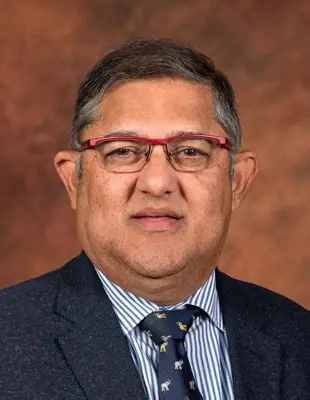
Image provided (Deputy minister- Forestry, Fisheries and Environment- Anand Singh addressed the Summit on BRAG today in Johannesburg.)