THE Automobile Association has warned that the country is losing the manufacturers that sit downstream of its car factories and has called on government to make a clear decision on automotive policy.
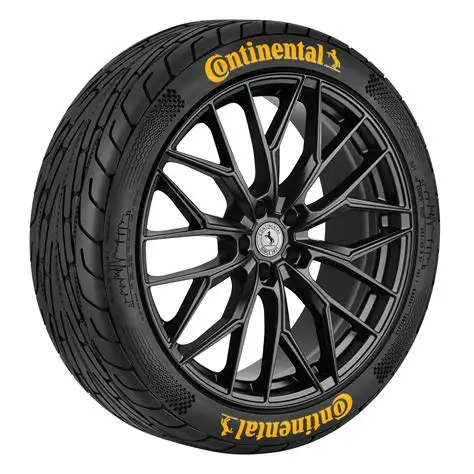
This comes as Continental halted production at its Gqeberha tyre plant and announced it is considering closing it.
About 950 jobs are at risk at the plant, which has made tyres since 1947. If Section 189A consultations find no viable alternative, it could close permanently by early 2027. Continental has cited years of underused capacity, low-cost imports, rising energy costs, disrupted supply chains and fragile infrastructure.
“At Automechanika in Johannesburg last month, I warned the motor industry that the businesses downstream of the carmakers would be the first to fold,” says Bobby Ramagwede, chief executive officer of the AA. “The supplier watches the order book shrink. Then the gates close. And once the toolmakers pack up their dies and the engineers leave, no one comes back. Gqeberha is what that looks like.”
Nelson Mandela Bay has seen this before.
Bridgestone closed its Port Elizabeth tyre plant in 2020.
Goodyear stopped making tyres in Kariega in August 2025, affecting more than 900 workers.
If the Continental plant closes, more than 2,000 tyre-making jobs will have left the metro in about six years.
The Eastern Cape will have no tyre factory left, and South Africa will have two, in Brits and Ladysmith.
“None of Continental’s reasons is new, and all of them are fixable,” Ramagwede says. “Note that Continental is not leaving South Africa. Its local sales operation and BestDrive retail network will stay open, supplied by imports. That is the shift in miniature. If the plant closes, the tyres will still be sold here.
They just won’t be made here.”
In 2023, South Africa imposed anti-dumping duties on certain tyres from China. Local manufacturers then complained that tyres were being routed through Cambodia, Thailand and Vietnam to dodge them. The International Trade Administration Commission (ITAC) investigated and imposed provisional payments. In March, the trade minister declined to adopt ITAC’s recommendation, the 18-month statutory deadline lapsed, and on 27 March ITAC gazetted the termination of the case with no final duties.
“I cannot tell you how much that cost the Gqeberha plant, because Continental has not published the figures,” Ramagwede says. “But I would like to know whether anyone involved in that decision asked what it meant for the last tyre factory in Nelson Mandela Bay. This is not about where a tyre is made. It is about whether the rules we write are enforced, and whether anyone counts the cost when they are not.”
Vehicle and component production makes up 22% of South Africa’s manufacturing output and 5.3% of GDP. It employs 115,000 people directly and supports more than 500,000 jobs, and more than 40% of automotive jobs are in the Eastern Cape.
Yet local content sits at about 40%, against a masterplan target of 60%, and component makers say their orders have barely grown since 2019. Vehicles and parts already face a 25% tariff in the United States, and South Africa is set to lose AGOA from 1 January.
“Our automotive policy is the dinner party trick done badly,” Ramagwede says. “Yank the tablecloth with conviction, and the plates stay on the table. Drag it inch by inch, and everything slides off the edge. Government is dragging it, and Gqeberha’s tyre factory is the latest plate to slide.
Either we remain a country that builds and exports vehicles, or we become an import-and-retail market. Both are choices a country can make with intention. What we have now is a hodgepodge of policy left to brew.”
“Carmakers insist they are staying, and I hope they are right. But a carmaker staying is not the same as its suppliers surviving. Gqeberha has just shown us the difference.”
The AA is calling on government, carmakers and labour to act before the consultation window closes.
“Government, carmakers and labour have until early 2027,” Ramagwede says. “Every carmaker that builds here should be asked, in public, whether it will commit volume to the last tyre plant in the Eastern Cape.
When ITAC finds that existing duties are being dodged, the minister must decide within the deadline and publish the reasoning, including the jobs at stake. Government must also finalise the reviewed automotive masterplan and production programme by the 2027 Budget, with dates attached. And fix the ports, rail and electricity that Continental itself named among its reasons.”
The AA urges leaders across the automotive value chain, and every company that depends on it, to speak up.
“If you run a fleet, a dealership, a parts business or a factory, you are the board of directors of this sector,” Ramagwede says.
“Stop waiting quietly for someone else to ask for the decision. Ask for it out loud. Yank the tablecloth or set a new table. Either can work. Dragging it inch by inch only guarantees broken plates, and in Gqeberha, 950 people are now waiting to hear whether theirs is one of them.”