IT’S the month where South Africans are meant to celebrate their culture.
However, the industry responsible for putting so many of those stories on screen has spent much of this year barely able to get new productions off the ground because of the country’s stalled rebate system.
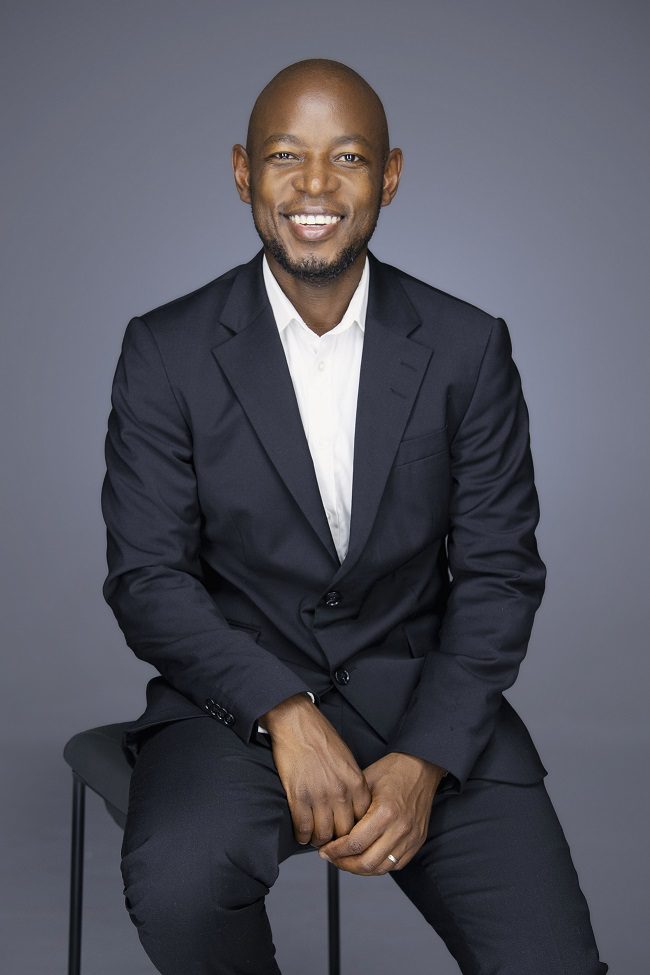
However, Odirile Mekwa, managing director of Quizzical Pictures – one of South Africa’s leading production houses, with international hits including Reyka and Intersexions to its name – is hoping that there is a breakthrough this Heritage Month.
“At the moment, we’re losing more jobs, the industry is losing credibility, and also losing international foreign direct investment as the whole system continues to backlog,” he says.
Behind the headline figures lies a human toll that rarely makes the numbers. Industry representatives told Parliament’s Portfolio Committee on Trade, Industry and Competition this month that the ongoing delays have already cost the country an estimated R822 million in production spend and 1 850 jobs this financial year alone, with roughly R700 million in applications stuck in a backlog after adjudication meetings stalled for more than two years.
Quizzical Pictures has felt this first-hand. The company recently lost a co-production with an Australian production company, based on the work of an author born and raised in South Africa and Eswatini but now based in Australia.
The project had been in development for years and involved the BBC, the streamer Stan and Amazon, all three committed to pre-buying the show. It collapsed while waiting for the rebate committee to convene and make a decision.
“We originally applied in 2024,” Mekwa says whose own route into the industry ran through finance rather than film school.
He is a chartered accountant with a Master’s in International Business Administration from the University of London.
“The series was meant to create around 300 jobs and well over 1 000 opportunities, and bring in more than R100 million in foreign direct investment. In the end, it fell over on the last hurdle because of local funding.”
“I’ve gone through the emotions but I’m hopeful,” Mekwa says, pointing to what is at stake beyond the balance sheet. “You see so many creatives being put out of work, or having had to get out of the industry already. Lots of people have lost jobs. Lots of people have lost their houses and their cars. Lots of people have seen their children taken out of school.”
Yet for the first time in months, Mekwa is quietly optimistic. The Save SA Film and TV Jobs Coalition and the Department of Trade, Industry and Competition (DTIC) have reached an agreement to restart the incentive programme, which has processed no new applications since 2024. Adjudication of the backlog is scheduled to resume on September 30, and the department has indicated that it is in talks with National Treasury about a more fiscally sustainable rebate structure.
“Earlier this year I was pessimistic,” he says. “We’d marched to Parliament at the beginning of the year, and we were mandated to come to the table for the debate. We had our meetings, but everything stalled, with the DTIC saying they didn’t have sufficient funding. So we went back to Parliament to report once again that things were not moving and were at a stalemate.”
The shift in tone has a numerical basis.
The “contingent liability” the DTIC has blamed for freezing the programme has fallen from around R2 billion in 2021 to R255 million by June 2026, and the department’s 2026/27 budget allocation of R236 million has now been confirmed.
Unresolved issues remain, though: the coalition said talks had deadlocked as recently as 25 July, and MPs at the hearing questioned whether clearing historic liabilities means much if the incentive itself still isn’t working. All eyes are now on September 30, when adjudication is scheduled to resume.
If the system is fixed in time, Mekwa believes South Africa could still make good on the industry’s long-standing ambition which is a breakthrough on the scale of that of the South Korean industry.
Over the past decade, its television industry has gone from a heavily censored, domestic medium into a multi-billion-dollar global export.
It has been driven by deregulation, fierce creative competition and heavy streaming investment. Korean content now reaches hundreds of millions of viewers worldwide and Mekwa sees no reason South Africa couldn’t follow a similar path.
“We really need the rebate back in order to make the international breakthrough,” he says.
“A perfect example is Korea, which has gone from one breakout hit every couple of years to being a permanent fixture globally. I’m not saying South Africa needs to produce 50% of what the world watches.
However, going from one hit every two years to three or four percent of the global slate would be transformative. And it cannot be the responsibility of one actor, one show, one director or one production house. It has to be the industry and the country rising together.”
Mekwa’s view is that chasing international deals does not mean giving up on the local market, which has its own role to play.
“Increasingly, as an industry, we need to be export oriented. But that can’t be every producer’s strategy. There’s a lot of work that’s local and specific, that doesn’t need to and shouldn’t be forced to travel,” he says.
“If you chase international appeal too hard, you lose local appeal. It’s a balancing act. Even as you go abroad, you have to keep a strong local base. That’s what gives your work its distinct flavour and keeps you sharp.”
What makes the industry worth fighting for, in his view, is how few barriers it puts up.
“You don’t need to be anyone, or hold any title, to come into it. Almost anyone can come in, but once you’re in, you learn the skills, you build up a high level of skill, and it also pays well. If you think about the country, we have a job creation problem, and every production creates hundreds of jobs for people who don’t necessarily need a chartered accountancy or any other qualification,” he says.
Mekwa also points to what has changed for black producers since he started out.
“I’ve seen more black producers working as genuine partners and contributors, rather than being brought on to tick a box.
It gives me enormous pleasure to see more of us going to international markets to pitch our products and seeing how our confidence grows. People are saying, ‘I’m this guy out of South Africa, I’ve got great stories to tell, I’m running this business, and we can do business together.'”
Mekwa’s own background – which has included stints at Primedia, EHM International, Deloitte and Sakhumnotho Group Holdings – has been an asset at Quizzical.
“A lot of creative businesses are seen as practitioner-led, by directors and writers. However, often the business part gets left out, and I’d like to see more of that,” he says.
“I like to believe that my business background takes the company further than perhaps other creative businesses would go.”
Image Kevin Mark (Quizzical Pictures boss Odirile Mekwa says Gvt’s rebate should be implemented as soon as possible or else the industry will keep bleeding.)