THE City of Johannesburg is urging customers to regularly monitor their water consumption and inspect their properties for possible leaks to prevent water losses and unexpectedly high municipal bills.
The City has noted concerns from customers regarding unusually high or unexplained water bills. While a high bill may arise from various factors, customers can play an important role in identifying possible problems early by regularly monitoring their consumption and checking their water meter.
A sudden or unexplained increase in consumption may indicate a leak, increased usage or another matter requiring investigation. Early detection and prompt action can significantly reduce unnecessary water losses and help customers avoid escalating municipal accounts.
HOW TO CHECK FOR POSSIBLE WATER LEAKS
Property owners are encouraged to take the following steps:
1. Check whether your water meter continues to move
Turn off all taps, appliances and other water outlets on the property and ensure that no water is being used. Check the water meter. If it continues to register consumption, this may indicate a leak within the property.
2. Report municipal-side leaks immediately
Leaks occurring on the municipal water meter or municipal infrastructure outside the property boundary should be reported to the City as soon as possible for investigation and repair.
Prompt reporting assists the City in reducing water losses and enables the relevant technical teams to attend to the problem.
3. Repair internal leaks promptly
Leaks occurring within the property boundary are generally the responsibility of the property owner. Customers should appoint a qualified plumber to investigate, and repair suspected internal leaks without delay.
Customers should be aware that water lost through an internal leak may still pass through the meter and be recorded as consumption, resulting in a higher municipal account.
4. Request a meter test if you suspect a faulty meter
Customers who believe that their analogue water meter may be faulty may request a meter test through the relevant customer service process. The applicable testing fee is payable when the request is lodged.
Where testing confirms that the meter is faulty, the matter will be dealt with in accordance with the City’s applicable meter-testing and billing processes.
Where the meter is found to be functioning correctly, the testing fee will not be refunded, and the customer remains liable for consumption correctly recorded by the meter.
5. Monitor your consumption regularly
Customers should compare their current meter reading and consumption with previous months. Significant or unexplained increases should be investigated as soon as possible.
Customers are also encouraged to take regular photographs of their water meters showing the meter reading and date. This can provide a useful record when investigating unusual consumption or lodging a billing query.
6. Check whether your bill reflects an actual or estimated reading
Customers should check their monthly municipal accounts to determine whether the water consumption reflected is based on an actual or estimated meter reading.
Where an estimated reading appears inconsistent with the actual meter reading or normal consumption pattern, customers should submit their current meter reading and lodge a billing query through the City’s customer service channels.
WHO IS RESPONSIBLE FOR THE LEAK?
The City reminds customers that responsibility for water infrastructure generally depends on the location of the leak.
A leak within the property boundary is generally the responsibility of the property owner and should be investigated and repaired by a qualified plumber.
A leak on the municipal water meter or municipal infrastructure outside the property boundary should be reported to the City for investigation and repair.
Customers should therefore establish, where possible, the location of a suspected leak before lodging a service request.
HIGH WATER BILL FOLLOWING AN INTERNAL LEAK
Where an internal leak has resulted in a high municipal account that a customer is unable to settle immediately, the City encourages the customer to approach the nearest Customer Service Centre as early as possible.
Depending on the customer’s individual circumstances and applicable requirements, assistance may include entering an Acknowledgement of Debt (AOD) payment arrangement.
Where customers meet the applicable qualifying criteria, they may also be guided on available Debt Relief Programme options.
Customers should note that repairing an internal leak does not automatically cancel consumption already recorded on the municipal account. Any billing dispute or request for an adjustment will be considered in accordance with the City’s applicable policies and processes.
CUSTOMER SERVICE CENTRES
Customers may visit the City’s Regional Customer Service Centres, including:
- Region A: Midrand
- Region B: Randburg
- Region C: Roodepoort (City Hall)
- Region D: Jabulani
- Region E: Sandton
- Region F: Thuso House
- Region G: Lenasia
The City also operates satellite Customer Service Centres and payment points across its regions to improve accessibility and convenience.
REGIONAL CUSTOMER SERVICE EMAIL CHANNELS
Customers may direct account-related enquiries to the following regional email addresses:
- Region A – Midrand: regionArevenue@joburg.org.za
- Region B – Randburg: regionBrevenue@joburg.org.za
- Region C – Roodepoort: regionCrevenue@joburg.org.za
- Region D – Jabulani: regionDrevenue@joburg.org.za
- Region E – Sandton: regionErevenue@joburg.org.za
- Region F – Thuso House: regionFrevenue@joburg.org.za
- Region G – Lenasia: regionGrevenue@joburg.org.za
The City encourages customers to take an active role in managing their municipal accounts by regularly monitoring water consumption, checking meter readings, reporting municipal-side leaks immediately and repairing internal leaks promptly.
Early action can help conserve Johannesburg’s water resources while protecting customers from avoidable increases in their municipal accounts.
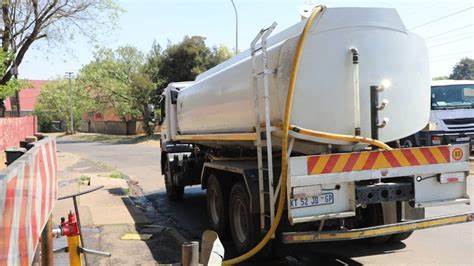
Image SLM (With water bills skyrocketing, water trucks will be on sight.)