STELLANTIS has detailed its ambition to increase revenues in the region by 40% while maintaining a double-digit operating margin.
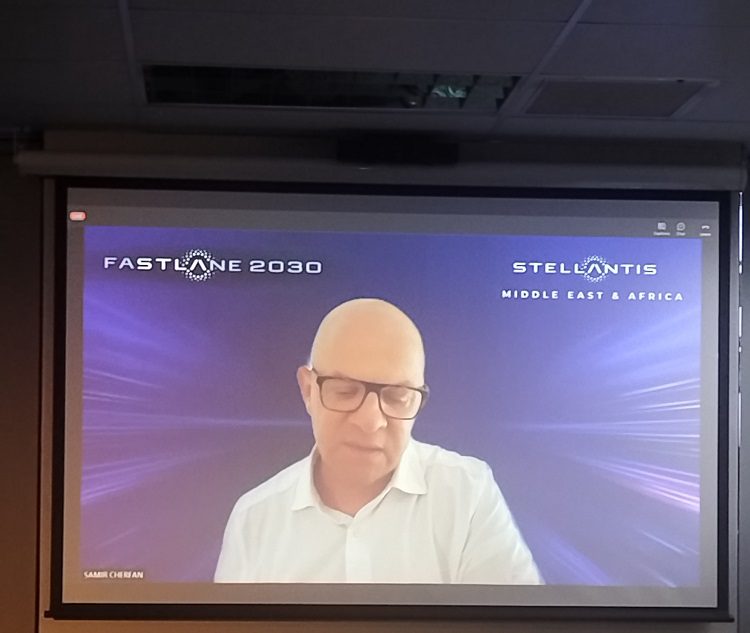
This was confirmed by Samir Cherfan, Chief Operating Officer for Middle East & Africa, who presented the FaSTLAne 2030 strategy with a clear focus on its regional execution and growth trajectory.
“This will be driven by a major shift in vehicle sourcing, with a target to reach 90% of sales through 22 competitive carlines that will be either localized in the region or imported from Asia,” he told media virtually from Casabalanca- Morocco another key market for the organization.
In the Middle East and South Africa, the focus will be on improving performance by complementing the regional offering with competitively sourced vehicles and localization.
This would include the completion of the Kouga-Gqeberha plant that is going for “reframing or on-hold” according to Stellantis SA boss Mike Whitfield, until they revise the business case for the Eastern Cape facility and seek more clarity from the Government.
Pressed on the time frame, Whitfield confirmed it could take up to four to five months to be operational.
Building on this foundation, Stellantis will accelerate the deployment of its industrial and commercial footprint.
In the Mediterranean region, Stellantis will fully leverage its highly competitive plants in Morocco and Turkey, with a combined capacity of 800,000 units, while strengthening its market leadership and restoring Fiat’s momentum in Turkey.
In Algeria, Stellantis will continue to expand its manufacturing base through deeper localization.
This transformation is already underway and is expected to reach around 75% execution by 2028.
MEA stands out as one of the fastest-growing automotive regions globally, representing 25% of the world’s population today and projected to reach 40% in the decades ahead.
“Middle East & Africa is a central pillar of Stellantis’ growth strategy. We are already operating at scale with strong profitability.
With FaSTLAne 2030, we are accelerating execution by transforming our sourcing, maximizing our industrial footprint and deploying a focused product strategy to capture the region’s full potential,” said Cherfan.
Stellantis has established a strong position, ranking number two in the region for four consecutive years, with more than 500,000 vehicles sold annually and sustained double-digit profitability.
The company says its annual investments of approximately €300 million is leveraged through partnerships and co-investments, and that half of these models will be produced locally, while the remainder will be sourced from Asia to ensure competitiveness across segments and markets.
Talk of Asia, Whitfield believes China models are shaping the motoring industry today and the likes of Donfeng and Leap brands will push that narrative.
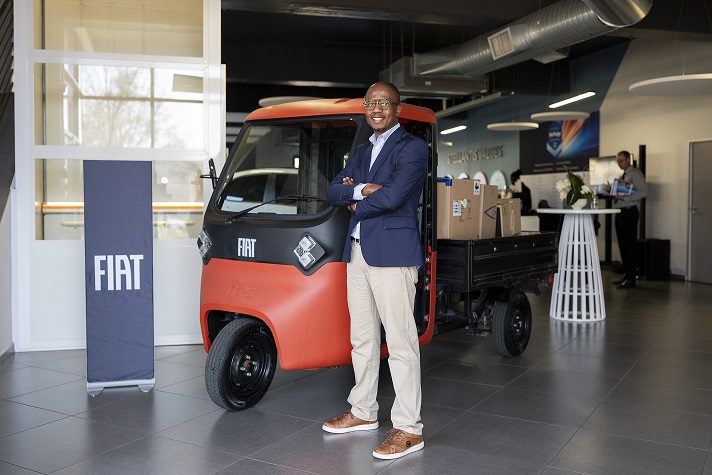
On micromobility Stellantis says it will launch Fiat Tris micromobility in early 2027 a unique proposition.
The new brand Fiat Tris will be affordable, will easily access densed areas, and comes with low total cost ownership for emerging operators and will benefit SMEs and create income for them.
Tebogo Rabotho- director of Micromobility at Stellantis says the FIAT micromobility that is popular in Morocco, will create economic opportunities and will be durable for Africa conditions, including SA.”
On the contentious issue of recalling of brands, Whitfield did not mince his words and warned that if South Africa does not heed the call, it will be at their own detriment.
“It seems we need more advocacy campaigns to create awareness amongst South Africans on the recalling of cars, we need to scale up. It’s a worrying trend that must be addressed and it’s for their own safety,” he warned.
Image SLM (Stellantis –Chief Operating Officer for Middle East & Africa, Samir Cherfan, limned addressing media virtually from Casabalanca.)