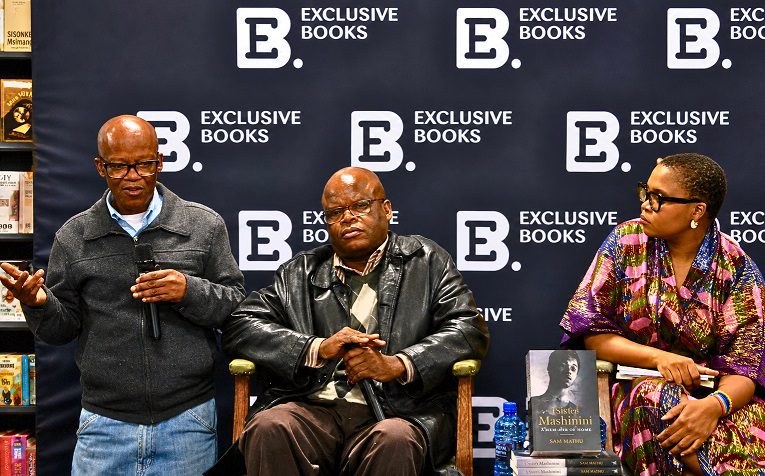
WHAT had been billed as a normal book release transformed into a platform which revealed old wounds political ideological ructions and a family’s unanswered questions during author Sam Mathe’s launch of his new offering, Tsietsi Mashinini: Elusive Hero of Soweto, at the Mall of the South branch of Exclusive Books, at the tail end of Youth Month.
If the sizable crowd of guests who had turned out for the early Friday evening occasion had expected a usual discussion about extracts of the tome and a subsequent signing session over the wines on offer – they were in for a ‘rude awakening’, not only because of the contents of the paperback, but also because of the “shoot from the hip” forthrightness of the late Soweto Uprising icon’s kid brother, Dichaba.
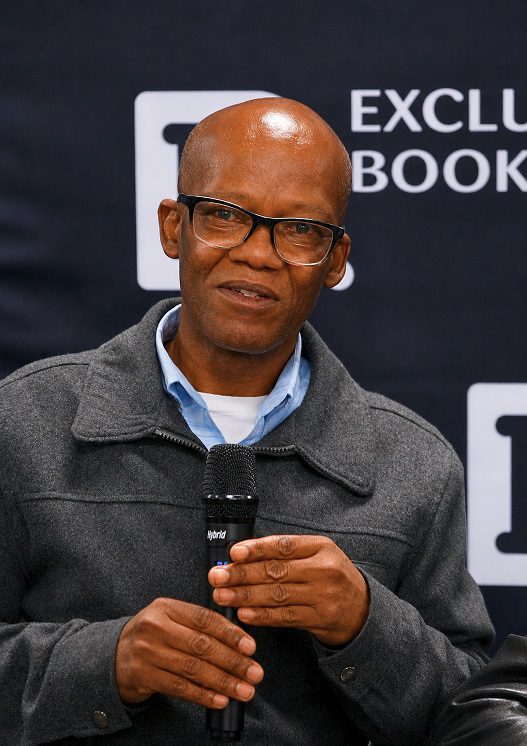
The ninth sibling and one of three brothers now remaining – from initially eleven of a total of thirteen siblings who included identical twin sisters – Dichaba didn’t hold back, after moderator, News24 journalist Bongekile Macupe, invited him onto the podium to address the rendezvous.
Especially acknowledged by Mathe for his assistance in providing him with valuable information about the Mashinini family pending his collation of the narrative, Dichaba emotively revealed to those present how Tsietsi’s brutal end devastated their mother Nomkhitha – adding that he “can’t forgive these guys.”
The matriarch – who didn’t even know the truth from Adam that her second born child was one of the ‘ringleaders’ of the June 16, 1976 march in opposition of Afrikaans being imposed on black students as a medium of instruction – had to, among a plethora of securocrats’ reprisals, be detained without trial at a penitentiary located far away from Soweto in 1977 and upon release in 1978, forfeit employment for becoming a ‘communist’ and ‘terrorist’.
He further let the audience in on the past experience of growing up as part of the Mashinini clan in the mid to late 1970s – describing scenarios of constant police harassment which involved midnight raids and deliberate teargassing of the family’s house in Central Western Jabavu, amid which prevailed an environment of himself being made to feel guilty by neighbours for being “ngwana wa ko bo Tsietsi” (Tsietsi’s sibling).
Dichaba’s unexpected outburst was understandable when considering that his elder sibling’s death around July 1990 in Guinea has been cloaked in mystery – and 35 years on. Varying versions have emerged, attributing the June 1976 leader’s demise to natural causes, assault and murder.
The corpse the Mashinini family received in South Africa upon its repatriation from West Africa in August 1990 however showed ghast tell-tale marks pointing to brutal murder. Added to the mysterious circumstances of the erstwhile Morris Isaacson High School alumnus’ death was that Nomkhitha didn’t accede to an autopsy at the time and calls for an inquest made in 2012 haven’t been considered by the South African government to date.
In his tome Mathe hints at the real truth regarding Mashinini’s end as one of numerous cover-ups of circumstances surrounding deaths of anti-apartheid activists such as Stephen Biko and Onkgopotse Tiro, et al.
It didn’t assist the quest for closure that a prominent figure who was close to the student leader such as musician Miriam Makeba died without being forthcoming about events surrounding his demise.
Another shocking recollection contained in Mathe’s account is that of the extent of political ideological ructions which sought to tarnish Mashinini’s legacy – as was expressed in the African National Congress’ determination to ‘destroy’ Mashinini, ostensibly for refusing to join the organisation, pending the exile period and the evisceration of his tombstone at Soweto’s Avalon cemetery in 1997 and 2011 respectively.
(The expedient climbing onto the bandwagon of Mashinini’s legacy would much later in the 21st century manifest itself in 2024 through uMkhonto weSizwe Party’s opportunistic draping of his statue at the June 16 Interpretation Centre in its regalia – effectively claiming him even in death.
Such confrontations were also brought to bear onto Black Consciousness and Charterist aligned activists and families – with deadly consequences. Among victims was the father of Jefferson Lengane – Tsietsi’s fellow Soweto Students’ Representative Council leader who’d be handed a 5-year suspended sentence for sedition in October 1979, for his role in the 1976 upheaval – who, a decade on in 1986, would be abducted and murdered.
Salt would be rubbed into the family’s wound when Lengane – a future colleague of Mathe’s at Drum magazine in the post-1994 era – would have his Soweto abode torched by political rivals.
In a chapter titled Return and Burial, Mathe poses the question: so should we understand Tsietsi’s demise against this background of violent and fatal ideological clashes?
Yet, for the documented contestations as to which faction can justifiably lay claim to being the legitimate custodian of the struggle for liberation from apartheid, Mathe also cites a chronology in which Mashinini’s role in the Struggle was ultimately acknowledged by the post-1994 ANC government – extending to his statue being unveiled during the 34th anniversary of the Soweto Uprising in 2010 and post-humously being honoured with the Order of Luthuli in Bronze, in 2011.
Prior to those gestures of recognition and despite ANC leaders objections to Mashinini’s nonconformist principle against the movement’s ideology pending the exile period, the organisation’s future South African president, Thabo Mbeki, had at his August 12, 1990 funeral declared: “Personally, I’m very happy to have known Tsietsi, and to some extent feel guilty that we were not around all the time in the absence of his parents to assist him to grow up to persist along the path he has chosen.”
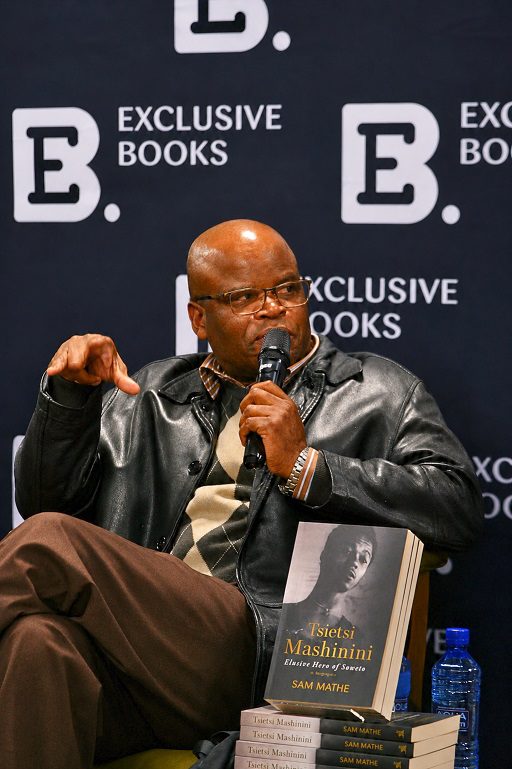
Although at the launch Mathe described his literary effort as a holistic attempt which he concedes to be not “the whole story”, he’s tongue-in-cheek described the new project as a “low hanging fruit” for which he was surprised there previously hadn’t been any takers of.
In fact, the closest offering regarding Mashinini is a 2004 tome by American journalist Lynda Schuster, Mathe also referenced from a title, A Burning Hunger: One Family’s Struggle Against Apartheid. In it, Schuster tellingly made the observation, “If the Mandelas were the generals in the fight for black liberation, the Mashininis were the foot soldiers.”
And not only does Mathe’s narrative dwell on his pre-exile and exile travails, but also delve into the lighter side of an activist who also balanced his existence with family considerations – with the Soweto firebrand ensnaring the affection of the then Miss Liberia Welma Campbell (who’d been introduced to him by Miriam Makeba – for whom she was a backing singer) in 1979.
The book includes an image of a March 1979 Pace magazine cover limning the couple on their wedding day in Liberia, which was a scoop for the South African publication which Mathe incidentally later got to work for.
Another image is the famously familiar one of Mashinini and Khotso Seatlholo limned with raised fists during their 1977 reunion in Botswana, recorded by Alf Kumalo.
A 224 pages paperback biography published by Tafelberg Publishers Ltd, Tsietsi Mashinini: Elusive Hero of Soweto, is Mathe’s most recent offering aptly released 50 years on after the historic moment which spelt the genesis of the demise of apartheid.
Top Image Jacob MAWELA (Dichaba Mashinini, Tsietsi’s younger brother, limned alongside author Sam Mathe and moderator Bongekile Macupe during the launch of the new tome at Exclusive Books at the Mall of the South.)