FORTY-NINE years ago today, the apartheid state tried to silence a nation’s conscience.
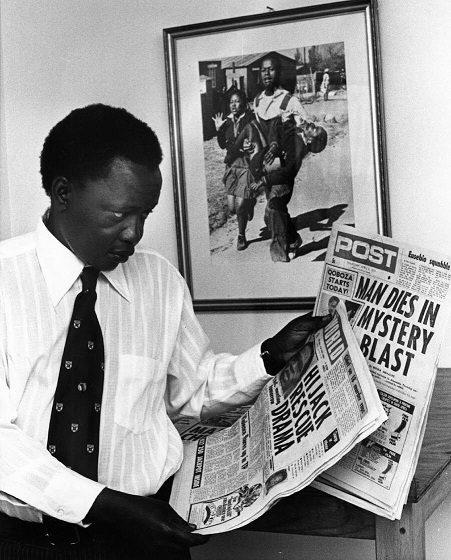
On 19 October 1977, it banned The World and Weekend World, detained editor Percy Qoboza, placed Daily Dispatch editor Donald Woods under a banning order, and outlawed Black Consciousness Movement (BCM) organisations. This occurred five weeks after the death of BCM leader Steve Biko in police custody.
The Press Council of South Africa honours the journalists who paid for the truth with their freedom, livelihoods, and, in some cases, their lives. Although the bans silenced targeted publications, they could not extinguish the pursuit of truth.
Today, Section 16 of our Constitution guarantees freedom of expression and media freedom, a moral imperative that each generation must defend.
Defending that freedom requires more than resisting censorship.
Journalism needs funding, people, time and access to audiences. The right to publish means little if a newsroom no longer has the capacity to report. Although financial collapse is not the same as state repression, a closed newsroom leaves the public without credible journalism, either way. We must protect not only journalism’s freedom but also its capacity to exercise it.
That protection begins with trust.
Credibility gives audiences, advertisers, and funders a reason to support journalism. Publishing unverified claims, misleading headlines, and disguised sponsored content gives them reason to turn away. Therefore, ethical standards must not be compromised in the struggle to survive.
Yet credibility alone cannot fund reporting. Newsrooms need both public confidence and dependable resources to fulfil their civic duty.
Those resources must also support the people responsible for reporting.
Retrenchments and closures have weakened news organisations, leaving many communities without local reporters. Freelancers and community journalists too often receive low or delayed pay and are assigned dangerous work without adequate insurance, training, or support.
Media owners must regard fair compensation, safety, and care as both ethical obligations and essential prerequisites for independent journalism.
Financial insecurity can make journalists vulnerable to inducements and undue influence. To ensure that journalism can withstand pressure, we must support those who are expected to resist it.
Supporting journalists also requires establishing a fairer relationship with the platforms through which most South Africans access news. Global platforms exert significant influence over which stories reach audiences, operating under rules that are neither transparent nor accountable to the South African public. This influence undermines editorial independence and is compounded by interference from political actors and interest groups.
The issue is not merely who controls distribution, but also who benefits from reporting.
The Competition Commission’s Media and Digital Platforms Market Inquiry has confirmed that these platforms derive value from South African journalism without providing fair compensation. Its remedies must be implemented fully and in good faith.
A fair return must include substantial, sustained monetary compensation for public-interest journalism from which digital platforms derive value.
This compensation is for work that serves the public and must reflect the value of that work while meaningfully supporting original reporting, verification, and investigation.
Training, advertising credits, and technical support may supplement these payments but cannot replace the funds needed to compensate journalists and sustain newsrooms. All payment arrangements must be transparent to protect editorial independence and ensure that community, local, and Indigenous-language publishers have a fair opportunity to benefit.
Artificial intelligence brings two interrelated pressures into sharper focus.
First, generative tools can summarise, repackage, and imitate journalism without attribution, consent, or payment. Journalism cannot be treated as an inexhaustible resource while its producers are denied the means to replenish it.
Second, synthetic images, audio, and video increase the burden of verification, as newsrooms must expose convincing fabrications while defending genuine evidence against dismissal as fake.
Those verification pressures do not disappear when newsrooms adopt generative tools.
Human judgement, rigorous verification, clear disclosure, and strict protection of confidential sources and material must remain central.
Responsibility for publication cannot be delegated to software.
The same commitment to editorial independence should extend to funding.
Platform funds, donor grants, government advertising, and commercial partnerships can help sustain journalism. However, they should not influence editorial decisions. Newsrooms should disclose such support transparently, safeguard editorial independence from funder influence, and ensure that financial sustainability does not come at the expense of their editorial voice.
The effects of weakened journalism are felt most acutely by the communities it serves.
As South Africa approaches local government elections, declining newsroom capacity leaves the tier of government closest to people’s daily lives inadequately covered. Journalists have also faced online harassment, doxxing, and intimidation, sometimes simply for seeking a right of reply, as required by the Press Code.
An attack on a journalist is an attack on every citizen’s right to know and hinders the free flow of information.
Defending the public’s right to know also requires journalists to avoid amplifying false claims. Those who deliberately spread misinformation often hope that mainstream news outlets will repeat it. Newsrooms can help by prioritising verified facts, carefully assessing whether a claim merits amplification, and publishing corrections alongside the original report or in the place where it appeared.
However, even the most robust reporting cannot benefit those who cannot access it.
Paywalls, data costs, and the predominance of English-language coverage may make misinformation more accessible than credible news, particularly in rural areas and townships.
Investment in journalism and efforts to expand access must go hand in hand, ensuring that the cost of producing high-quality reporting does not leave communities without reliable information. A sustainable media system must serve both those who can afford access and those who cannot.
Access to reliable reporting must be supported by effective mechanisms to hold news organisations accountable.
The Press Council supports this objective by upholding ethical standards and ensuring accountability remains accessible. While these safeguards cannot replace newsroom funding, they help sustain the public trust on which journalism depends.
As part of fulfilling this responsibility, the Press Council will consult its members to review and strengthen the Press Code’s guidance note on artificial intelligence.
This work will address labelling AI-generated content and setting labelling thresholds. Recognising that these measures must be accompanied by broader access to redress, the Council continues to raise awareness of its free, independent complaints process and to improve its accessibility, particularly for communities with fewer resources.
As we commemorate Black Wednesday, the Council urges political parties and their supporters to stop harassing and doxxing journalists and to refer disputes over media coverage to either the Press Council or the Broadcasting Complaints Commission of South Africa.
The Council also calls for clear, consistent standards to ensure transparent, equitable allocation of state advertising, while supporting community and local media in ways that strengthen their independence.
Our responsibility is to ensure that media deserving of protection remain accountable to the people they serve.
This requires journalism to have the resources essential to investigate and report accurately, the independence to publish, and the public’s trust to be heard.
We cannot celebrate media freedom while accepting the loss of the journalism that gives it meaning.
The truth could not be silenced then, and it must not be starved of resources now.
Image provided (Percy Qoboza, former editor in Chief for both The World and The Post newspapers.)