SPENDING time in Naledi, Soweto, after voting solicited mixed emotions.
Following the Local Government Elections on Wednesday, a sizeable amount of residents were not convinced the ANC should be having a majority, having cast their votes in various stations.
Their concerns pointed to only two sticking points: water and electricity, however not discounting joblessness amongst youths.
“If only they could take care of the elders needs such as basic services- electricity and water, I tell you, I will have once again crossed the X for the ANC. But alas not,” said Nkele Mogatusi.
Nkele, who is married and employed in the public sector, says the grants aren’t enough for a household, considering the fluctuating economy.
“I take care of a family of six, excluding my 4, it’s a burden on my shoulders. We hope this local Gvt elections will come out with a party that will consider their needs, not luxury, of the elders. Provide basics so that they can wash and take their medicines, that’s all I’m asking for,” reacted Themba Masike, a community leader in Naledi, who ashamedly had to ask for water from a neighbour who is 15m away from him, last week.
“Look at these young boys and girls- they are toiling the streets everyday with no hope of job opportunities or study programmes, they’ve lost hope when we engage them. Last resort, says Themba, unfortunately- will be pregnancy, drugs and crime.”
We understand the ANC can’t be all over the show, but lending an ear, engaging and providing sound advice, will be appreciated by its constituents. Councillors cannot be visible when elections are around the corner, it can’t and should not be, rounded off Nkele.
This morning, the results show that the ANC’s support has plummeted around the country by 13.14 percentage points compared to 2021, while, the Democratic Alliance support has surged by 8.68 percentage points.
As it stands nationally, the ANC has 32.45% of the vote, and the DA has 30.34%.
The DA is leading in Gauteng and the Western Cape.
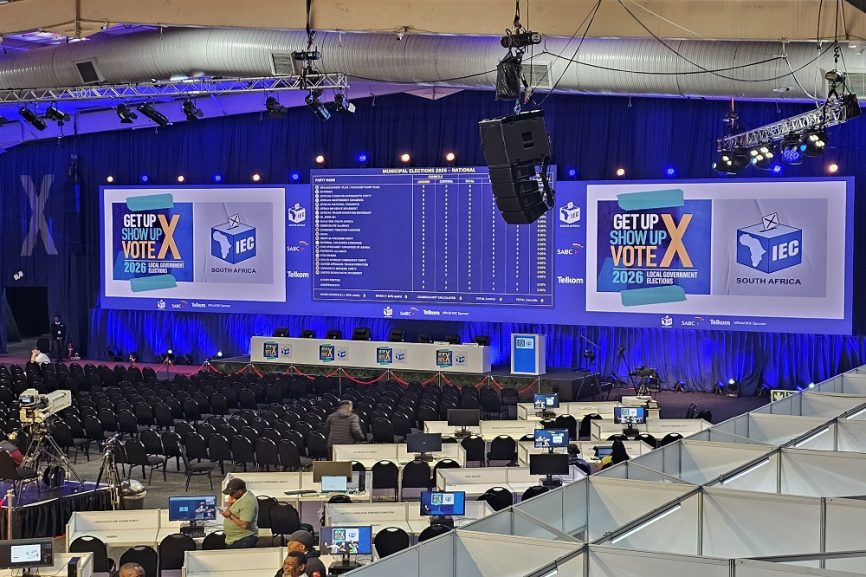
This is according to the Newsday Election Results Portal, which delivers live results from the Independent Electoral Commission (IEC).
The IEC reported that voting went smoothly, with no major hiccups or problems at South Africa’s 23,696 voting stations.
So far, the Council for Scientific and Industrial Research (CSIR) has put out its first national prediction of the final results of the government elections.
Using data from 11.5% of voting districts, the CSIR forecasts the ANC to end with 31.5% of the national vote and the DA to have 26%.
They will be followed by the MK Party at 9%. Currently, according to Newsday’s portal, the MK Party is leading in KwaZulu-Natal.
The Freedom Front Plus is on track to be South Africa’s fourth-largest party, the CSIR said.
This comes as support for the Economic Freedom Fighters plunges by 5.45 percentage points compared to 2021.
The fall in support for the ANC was largely expected as South Africans became increasingly dissatisfied with service delivery failures.
Political analyst Frans Cronje said this is a clear signal of regime change in South Africa, with the country historically being dominated by a single party for the past 80 years.
Since 2024, this hold has been broken by coalition governments at a national and local level.
Cronje said South Africa is undergoing a two-step regime-change process, with the first step being electoral losses for the ANC.
This step is largely complete, as 90% of South Africans feel the country is heading in the wrong direction and voter support for the ANC continues to drop.
The second step is for people to gain confidence that a new regime will defend its interests and should be supported.
Cronje said this step is not yet complete because no single political party has built enough trust among the broader population to gain total control- additional reporting provided.
Vote counting is still on and by Sunday the country should know which party stands a better chance to lead, and possible coalitions.
Meanwhile, the IEC has recorded 800 objections throughout the country.