TRANSFORMATION is a Constitutional and economic imperative.
As legal minds gathered at the media breakfast briefing organised by the Legal Sector Code, one thing that was uttered time and again is- black legal practitioners are still overlooked until this day.
This is because huge Government or big corporates briefings/procuring are handed to white legal practitioners and according to the study, practicing attorneys –White constitute 45,13 %, African 38,45%, Coloured 5,49 percent, Indian 9,32 percent and others represent 1, 61 percent.
Despite Black South Africans (African, Coloured and Indian) constituting 92 % of the
country’s population, the legal profession continues to reflect historical disparities.
These percentages are worrisome and indicate huge gap of inequality within the legal fraternity hence the introduction of Legal Sector Code that would seek to address such indiscrepancies.
Gazetted on 20 September 2024, the LSC represents one of the most significant transformation interventions since the dawn of democracy.
It seeks to address decades of structural inequality that continue to limit access, ownership, opportunity and economic participation for Black legal practitioners and change this reality.
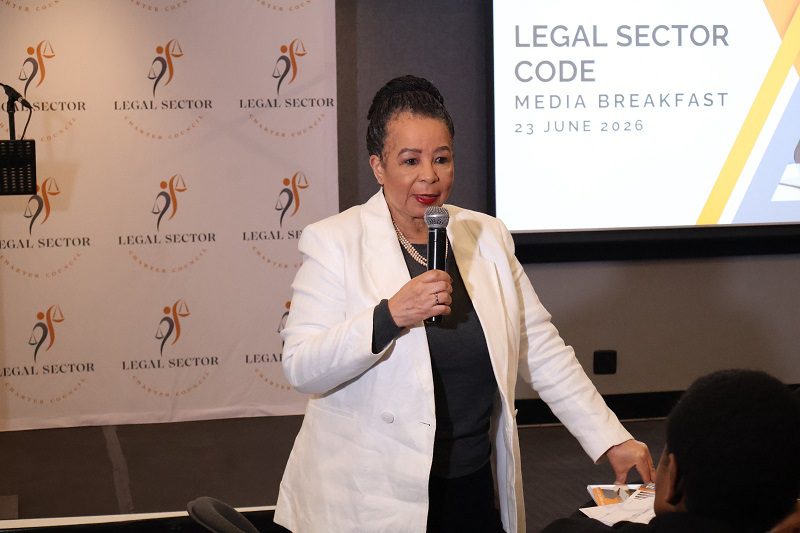
According to its board chair and well respected figure within the legal sector Christine Qunta, to mitigate such, they will launch what is called Legal Sector Transformation Fund, that will be used for skills development and ESD initiatives; provide financial support; also support black female legal practitioners during maternity leave; funding for training in specialised areas of the law and also provide support to candidate attorneys and pupils.
“Many Black attorneys and advocates face persistent barriers, including limited access
to quality legal work, unequal briefing patterns, restricted opportunities in specialised
fields of law, underrepresentation in leadership positions, and high attrition rates
among young practitioners, and the fund will seek to help,” says Qunta.
The Code will also introduce measurable and enforceable transformation targets aimed at increasing access to legal work, expanding ownership and management opportunities, strengthening skills development, and creating sustainable pathways for emerging Black legal practitioners.
“The Legal Sector Code is not about exclusion; it is about inclusion. It is about creating a legal profession that reflects the constitutional values of equality, dignity and access to opportunity.
It is about ensuring that talent, regardless of race or gender, is afforded a fair opportunity to participate and thrive,” continued Qunta, in response to one White male from Pretoria Bar, who questioned the Codes representativeness.
Among its key provisions, the Code requires organs of state and public entities to
significantly increase the procurement of legal services from Black attorneys and
advocates, with dedicated targets for Black women practitioners.
Deputy Director-General, Susan Mangole from the DTIC says in support of the Code, they will also review the much-talked about BBB-EE policy as it also requires transparency, dignity, impartiality and inclusivity.
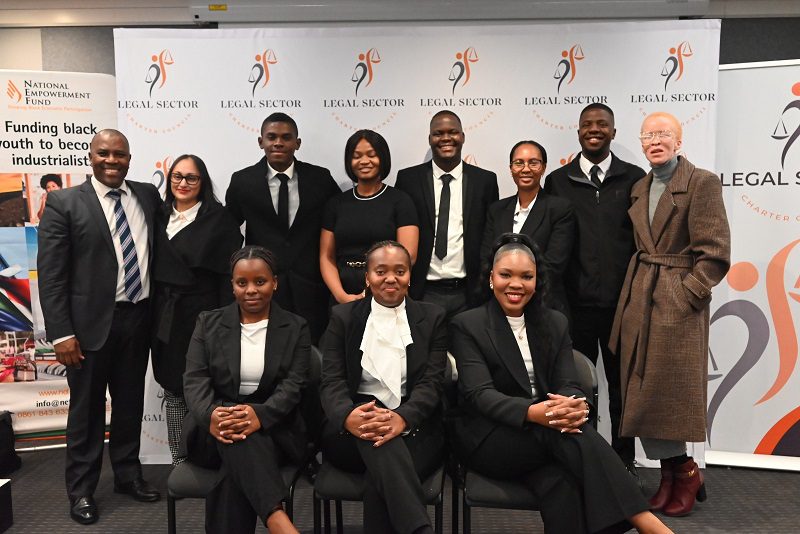
“As Gvt and the department, we should work in tandem with the LSCC to promote Black excellence, especially young, black female candidate attorneys, who are here to witness this special occasion,” said Dr Mangole.
Charity Nzuza- LSCC chief executive officer, remarked working with the National Empowerment Fund (NEF) showed they believed in us to execute some of the work, especially in skills transfer and policy making.
“Instead of procuring business to other big corporates, they worked with us, and that’s leadership at work,” she opined excitedly.
This a cut-throat industry ‘you eat what you kill’ warned Mziwabantu Damani- a lawyer and CEO at NEF, who during his studies traversed from Hillbrow to Wits University by foot.
One must be astute, smart, tough and think out of the box to become of the recognised lawyers in this country or you will end up winding-up your practise to join corporate world.

“By so doing, you will jeopardise the career of others who work under your leadership as a principal, and unemployment of qualified lawyers’ number will increase, hence the issue of inequality within this sector. It’s a tough, unthankable job but manageable,” pointed-out Damani, who also confirmed they’ve contributed R1m into the fund.
He continued: “This Transformation Fund will help our young candidate attorneys/pupils to focus on their work and be remunerated according to hours they put in without being discriminated against.”
The call is for top law firms and advocates to contribute annually to the fund, and in turn will receive points from LSCC.
The Legal Sector Transformation Fund will also provide financial and developmental support to Black attorneys, advocates, candidate legal practitioners and emerging legal enterprises, helping to remove barriers that have historically prevented growth and sustainability.
LSCC also acknowledged candidate attorneys/pupils from all over the country and one of them is a young Leruo Maepa from ME Tlou Attorneys in Mahikeng, North West Province.
He tells he’s only a ‘month old with the practise and ready to hit the ground running’.
Images supplied (Christine Qunta- chairperson of Charter Board and well-respected figure within the legal sector, recorded addressing guests at the media breakfast in Sandton, on Tuesday morning.)