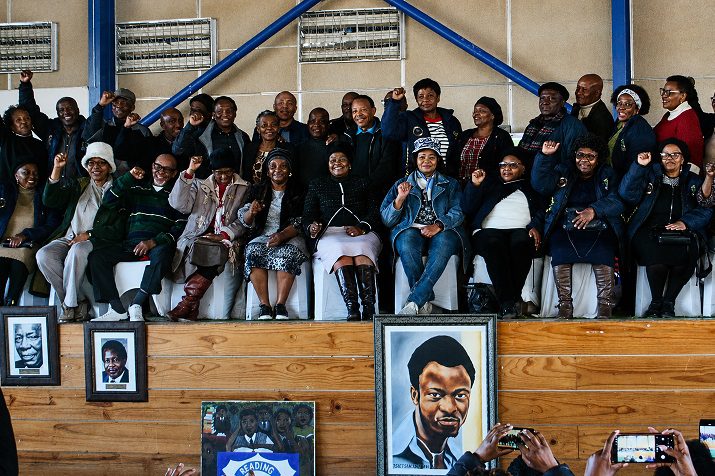
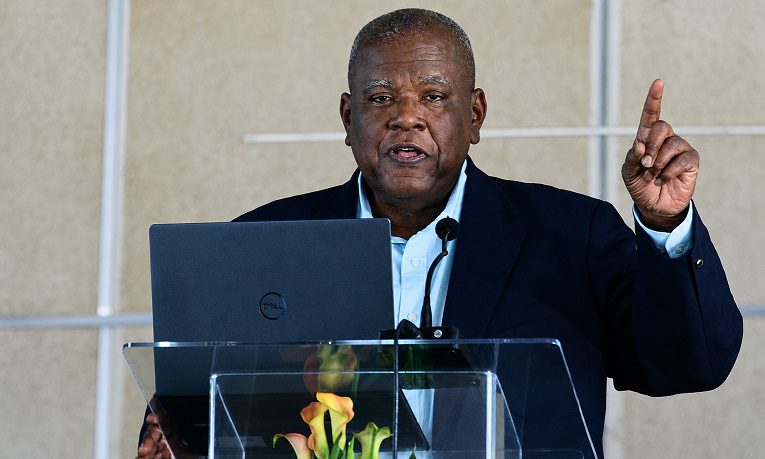
RENOWNED academic Professor Jonathan Jansen delivered the 11th Tsietsi Mashinini Memorial Lecture at Morris Isaacson High School in Central Western Jabavu, Soweto to mixed reactions from attendees nearly fifty years on from the students uprising of June 16, 1976 – on the Saturday afternoon of June 13, 2026.
The annual lecture’s latest high profile speaker, Jansen, a Distinguished Professor of Education at Stellenbosch University, augured well with an audience which included the school’s 1976 alumni, until he chided the current anti-immigrant mood prevailing across South Africa.
The unceremonious moment occurred when Jansen expounded on what he referred to as the seven important lessons of the Soweto Uprising for South African education and politics today – as part of a speech titled, 50 Years Later: What does the Soweto Uprising mean for Education Struggles Today?
While outlining what broad pan Africanism in the course of Africans’ struggle against colonialism and apartheid implied, Jansen had railed against the violent xenophobia targeting black Africans presently engulfing South Africa as being at odds with the movement – and then unequivocally stating: “this must stop now!”
This provoked a section of the crowd to audibly voice its disapproval by yelling, “mabahambe” (let foreigners depart) above him, while the academic resolutely justified his stance by mentioning some of the valuable contributions African immigrants such as the University of the Witwatersrand’s Cameroonian academic, Achille Mbembe have made to South Africa.
Amid the cacophony Jansen, who as Vice-Chancellor of the University of the Free State back in 2009 once sparked nationwide controversy by absolving four white students who had humiliated black workers by giving them food allegedly contaminated with urine, remained unflinching.
Other than the “storm in a teacup” moment, Jansen’s concise and unusually brief address (which lasted under 30 minutes) was appreciated – with each of the Cape Flats-raised intellectual’s lessons backed up by definitions as he mentioned factors such as principled opposition, broad-based coalition, personal sacrifices, and the singling out of education as the basis for freedom from oppression then and now – among those.
In a lesson he listed as the agency of students in the face of repression – Jansen quoted the late African-American tennis grand slam winner Arthur Ashe’s now famous exhortation of “start where you are, use what you have, do what you can.”
Drawing part of his lecture from the works of fellow academics, viz Sifiso Ndlovu and Noor Nieftagodien – both of whom have authored books about the Soweto Uprising – Jansen pointed out that the upheaval didn’t emerge from nowhere, but rather from grievances which had been ignored until it was too late.
“It is not hyperbole to suggest that the Soweto Uprising in the mid-70s was one of the movements that would sustain protests across sectors that would eventually contribute to the fall of apartheid,” declared Jansen.
Contextualizing his address to the present, Jansen lamented the shortcomings of the current revised history curriculum which he noted insufficiently mentions the uprising with a vacuous statement.
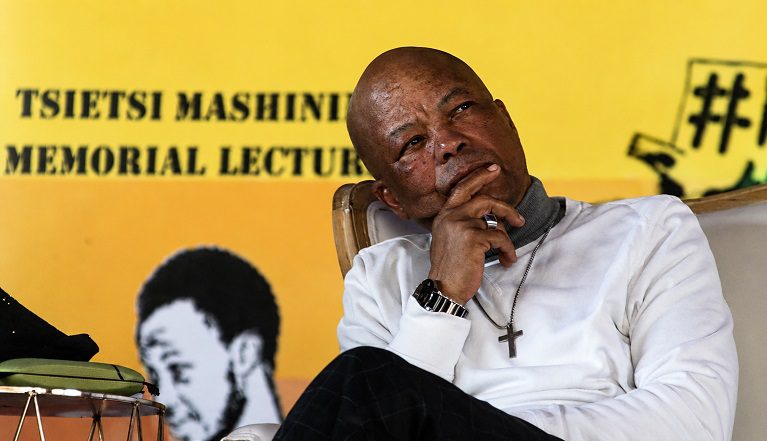
He urged the audience to demand an extensive and respectful account of the Soweto Uprising.
Furthermore, he enquired: “May I ask, are your public schools in Soweto now racially integrated?”
Jansen concluded: “May Tsietsi’s spirit and those of the thousands who sacrificed their lives for our freedom continue to live among us and inspire us to continue the struggle for the many still left behind in unequal schools and by a government that again risks not listening to the demands for equality of outcomes.”
Delivered within the prescribed theme, Fifty Years On – The South African Educational Landscape: Achievements, Challenges and the Enduring Legacy of 1976, Jansen’s address followed on those of previous speakers invited by Morris Isaacson High School such as Minister Ronald Lamola, Professor Olive Shisana, Dr Pali Lehohla, Professor Mamokgethi Phakeng, Dr Reuel Khoza, et al.
In addition to the substantial proportion of alumni present, attendees also include the host school’s current cohort of students, as well as recognizable figures such as the Tsietsi Mashinini Foundation’s founder Dee Mashinini, erstwhile 1976 student leader Majakathata Mokoena and actor Jerry Mofokeng wa Makhetha.
Image Jacob MAWELA (Jonathan Jansen, the Distinguished Professor of Education at Stellenbosch University, limned while delivering the Tsietsi Mashinini Memorial Lecture at Morris Isaacson High School in Central.)